
How to Prepare for Your First Dance Competition: A 12-Week Plan
A week-by-week plan for your first ballroom competition: choosing your entries, building stamina, handling nerves, and what actually happens on the day.

A practical, week-by-week plan for your first ballroom or Latin competition, from choosing your entries to walking off the floor after your last heat.
Your first competition is a big step. For weeks you have been dancing for your teacher and the mirror. Now you will dance for a panel of judges, next to other couples, under bright lights, with your number pinned on and a stranger calling your heat over a microphone.
It is completely normal to feel nervous. It is also completely manageable. The dancers who enjoy their first competition are not the ones with the most talent. They are the ones who prepared in the right order: routines first, stamina second, presentation third, and a calm, rehearsed plan for the day itself.
This guide gives you that order. It assumes about twelve weeks between deciding to compete and the event. If you have less time, compress the steps. If you have more, spend the extra time on technique.
Before you register: make smart choices
The decisions you make at registration shape everything that follows. Make them with your coach.
Choose the right event
For a first competition, a local or regional event is ideal. You save travel costs, you sleep in your own bed, and the atmosphere is usually friendlier than at a big national championship. Ask your coach which upcoming events suit your level.
Choose the right level
Competitions are divided into levels, usually Newcomer, Bronze, Silver, Gold and Open in the U.S. Each level has a syllabus that limits the figures you can dance. Enter at the level you dance comfortably, not the level you hope to reach. Dancing a simpler routine well scores better than struggling through a harder one. For an overview of how levels and styles work, read What Is DanceSport?
Choose a manageable number of entries
Many first-time competitors enter too much. A full schedule of heats sounds exciting until you are dancing your twelfth round of the afternoon with tired legs. For a first event, a few well-prepared dances are better than many average ones. You will learn more, enjoy it more and come home wanting to do it again.
Decide on pro-am or amateur
Most adults start in pro-am, dancing with their teacher. Couples who train together can enter amateur events. If you are not sure which suits you, see Pro-Am vs Amateur Ballroom Competitions.
Weeks 12 to 9: lock in your routines
Your routines should be set early. Changing choreography two weeks before a competition is one of the most common causes of mistakes on the floor.
- Finish the choreography. Every dance you entered should have a complete routine that fits your level's syllabus.
- Learn it until it is boring. You want the steps to be automatic, so your attention is free for timing, posture and expression.
- Fix the foundations. Posture, frame, footwork and timing matter more to judges than the difficulty of your figures. This is the time to clean them up.
- Plan your practice. Agree with your coach how many lessons you will take per week and how much you will practice on your own.
Weeks 8 to 5: build stamina and consistency
Most heats last around a minute and a half, but you may dance several heats in a row with only a short break. That is harder than it sounds.
- Dance full rounds. Run your routines to full-length music, back to back, the way you will dance them at the event. Most beginners only ever practice in pieces.
- Practice from the middle. Start your routine from different places. If you lose a step on the floor, you need to know how to rejoin the music without stopping.
- Film yourself. Video shows you what the judges will see. Watch for posture, head position and whether you look like you are enjoying yourself.
- Add some floorcraft. At the competition, other couples will be on the floor with you. Practice adjusting your routine when someone is in your way, with your coach acting as traffic.
Weeks 4 to 2: presentation and dress rehearsals
Once the dancing is reliable, turn to how it looks.
- Costume and shoes. Confirm what is allowed at your level. Dance at least a few times in your competition shoes and in the costume or practice wear you will compete in, so nothing surprises you.
- Hair and makeup trial. Do a full trial and dance in it. Hair must stay in place through spins and makeup must read from across the floor. Our competition makeup guide and guide to the ballroom look walk you through it.
- A mock competition. Dance your routines in front of a few people, with an announcer if possible. The goal is to get used to being watched.
- Plan the day. Find out the schedule, your heat times, travel time and where to park.
The final week: taper, rest and pack
The last week is not the time to learn anything new. It is the time to arrive rested and confident.
- Reduce your training load. Keep dancing, but shorter sessions. Tired legs do not recover in a day.
- Sleep. Prioritize sleep for the whole week, not just the night before.
- Run your routines lightly. Mark them, focusing on timing and confidence, not on fixing details.
- Pack early. Use our ballroom competition packing list and pack the night before at the latest. There is a free printable checklist in that article.
Physical preparation
Stamina
Cardiovascular fitness is the most overlooked part of competition preparation. Full-out rounds in lessons and at practice are the best training. Some dancers add a little cycling, swimming or brisk walking on non-dance days. See Is Ballroom Dancing Good Exercise? for how dance itself builds fitness.
Strength and posture
A strong core and upper back keep your posture and frame stable when you get tired. Simple exercises such as planks and back extensions help, but check with a qualified professional before starting anything new, especially if you have an injury.
Feet and shoes
Look after your feet in the weeks before the event. Break in your shoes, deal with blisters early and pack blister pads and tape.
Food and water
Eat what your body is used to on competition day. Small, easy snacks between heats keep your energy steady. Drink water regularly throughout the day, not just when you feel thirsty.
Mental preparation
Expect nerves, and give them a job
Nerves are not a sign that you are not ready. They are your body getting ready to perform. The aim is not to make them disappear, but to have something to focus on when they arrive.
Choose one or two focus points
Before each dance, choose one simple thing to think about, such as "tall posture" or "listen to the music." One clear thought is far more useful than a list of corrections.
Build a short pre-heat routine
Many competitors use the same few actions before every heat: a few deep breaths, a quick shake of the shoulders, a look at their partner, a smile. Practice yours in lessons so it is automatic on the day.
Visualize the floor
Spend a few minutes each day picturing yourself walking onto the floor, hearing the music start and dancing your routine well. This makes the real experience feel more familiar.
Plan for mistakes
Everyone makes mistakes on the floor, including champions. The judges are watching many couples at once and may not even notice. What they do notice is a couple that stops, looks worried or walks off. Your plan is simple: keep dancing, rejoin the music and smile.
What happens on competition day
Arrive early
Give yourself time to park, find the dressing area, check in and get your number. Rushing is the fastest way to raise your nerves.
Check in and get your number
At check-in you receive your competitor number. It is usually pinned to the leader's back. Keep safety pins in your bag.
Get ready
Do your hair and makeup with plenty of time to spare before your first heat. Then warm up gently, enough to feel ready, not so much that you are tired.
Listen for your heat
Heats are called over the microphone and listed on the schedule. You will usually wait "on deck," near the floor, a few heats before yours. Stay close and stay warm.
On the floor
Walk on with confidence, find a space, take your starting position and wait for the music. Dance your routine, adapt if another couple is in your way, and finish with a smile. Thank your partner as you leave the floor.
Between heats
Keep warm, drink water, eat something small and rest your feet. Avoid analyzing every mistake. Talk to your coach briefly if you need to, then refocus on the next dance.
After the competition
Results and placements may be announced during the day or at a later session. However you placed, your first competition gives you valuable information. Sit down with your coach within a few days and talk through:
- what felt strong and what felt shaky
- any feedback or marks from the judges
- what to focus on before the next event
And celebrate. Walking onto a competition floor for the first time is an achievement in itself.
Common first-competition mistakes
- entering too many heats
- changing routines in the last two weeks
- wearing new shoes for the first time on the day
- arriving late and doing hair and makeup in a rush
- skipping food and water
- stopping or walking off after a mistake
- trying to fix technique between heats instead of resting
Preparing with a World Cup Champion
Jelena Stojkovic is a World Cup Champion, 14-time National Champion and International Winner, and has coached competitors from their first Newcomer heat to championship level. At AscenDance Studio we prepare pro-am and amateur dancers for their first events with routines, technique, floorcraft and presentation. Learn more about our competitive ballroom and DanceSport coaching, or book a private coaching session to plan your first competition together.
AscenDance coach's tip: Pick your one focus point before you walk onto the floor and say it to yourself as the music starts. Under pressure, one clear thought beats ten corrections.
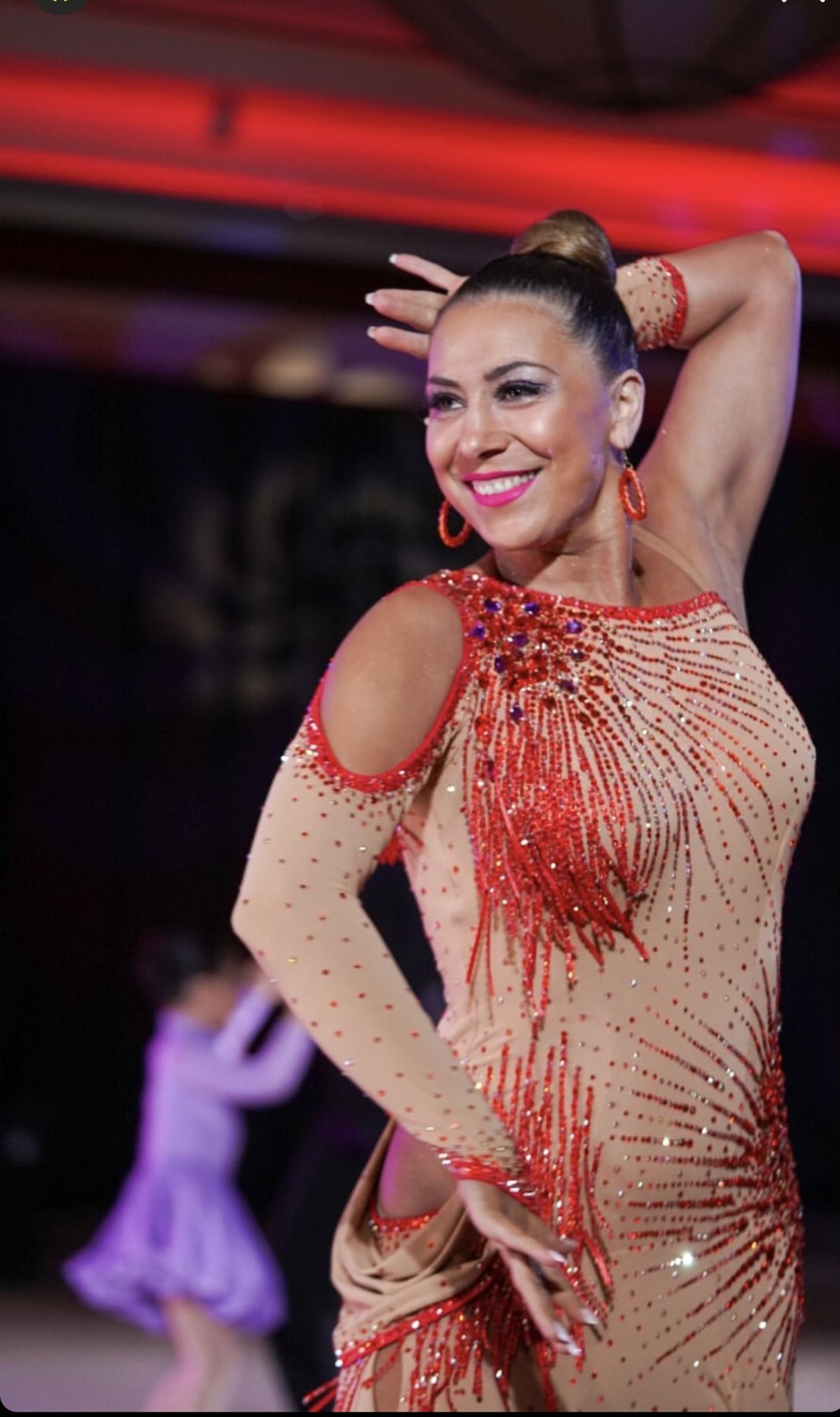
Jelena Stojkovic
Founder of AscenDance Studio. World Cup Champion, 14-time National Champion, International Winner, and Top Female Teacher in the USA nine years in a row, with more than 30 years in dance.
About Jelena →Book your first lesson
Private lessons in Addison, beginner Latin group classes in Dallas, and wedding first dance preparation.
14833 Inwood Rd
Addison, TX 75001
By appointment only
18484 Preston Rd #201
Dallas, TX 75252