
What It Really Takes to Create the Ballroom Look
Dress, hair, tan, makeup, jewelry, shoes and details: the nine decisions behind a ballroom competition look, and how to build a style that is truly yours.
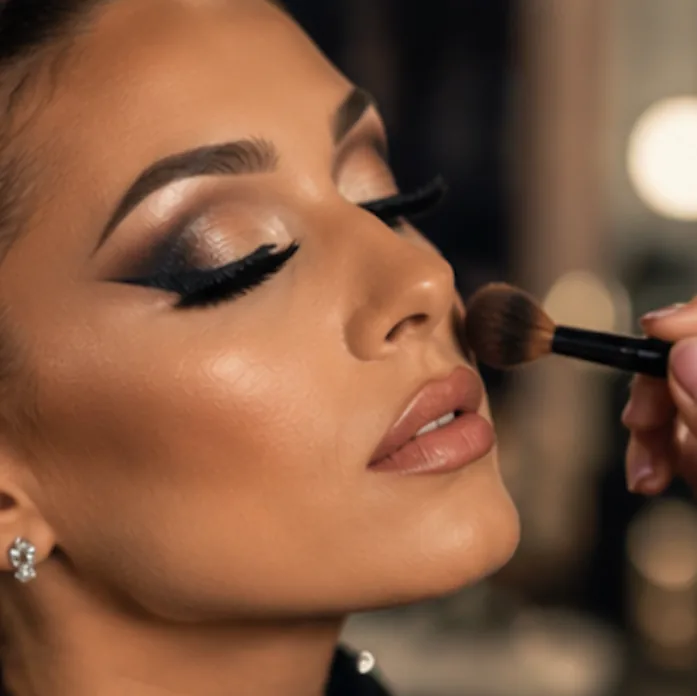
Nine decisions that have to look like one effortless image.
When a ballroom dancer steps onto the floor, we usually notice the finished picture first. The dress moves beautifully. The hair looks sculpted and polished. The makeup holds its presence under the lights. The skin looks smooth and defined. Jewelry catches the light at exactly the right moment. Even the smallest details seem to belong together.
From the audience, it can look effortless. But very little about a great ballroom look is accidental.
What you see on the floor is the result of many individual decisions that eventually become one complete visual identity. The dress, hair, makeup, tan, jewelry, shoes and accessories all matter, but none of them should exist independently from the dancer. A successful ballroom competition look starts with understanding who the dancer is, how she moves, what suits her body, and what she wants people to see when she enters the floor. That understanding takes time, and that is exactly what makes developing your own ballroom style so interesting.
1. It starts with the dancer
Before the dress, before the rhinestones, before the makeup, there is the dancer.
Every dancer has different proportions, different movement qualities and a different presence on the floor. Some naturally create long, soft lines. Others have a sharper, more athletic quality. Some personalities can carry an extremely dramatic look, while another dancer is far more striking in something refined and understated. That is why copying someone else's look does not necessarily create the same result.
You can see an incredible dress on another dancer and fall in love with it, but once it is on your own body, the proportions may tell a completely different story. The neckline changes how your shoulders look. The waist placement makes your torso appear longer or shorter. The volume of the skirt shifts your proportions. A color can bring your complexion to life or disappear against it.
The question should not simply be "Is this a beautiful dress?" A much better question is "What does this dress do for me?" Your ballroom image should work with your body, not ask your body to work for the costume.
2. The dress has to dance too
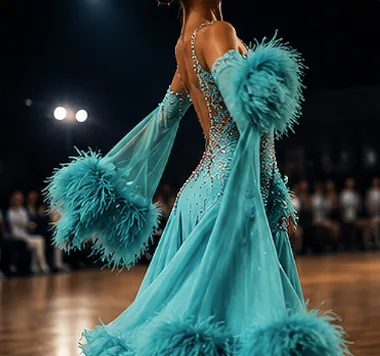
A ballroom dress is not simply formalwear with rhinestones added to it. It is a performance garment. It needs to look beautiful standing still, but more importantly, it needs to work while the dancer is moving. That changes everything.
The weight of the fabric, placement of stones, length of the skirt, amount of volume, fringe, feathers, floats, and even the way the fabric reacts to rotation all shape the visual impression of the dancing:
- In Standard and Smooth (Waltz, Tango, Foxtrot), a skirt can extend movement and make rotation look larger and more continuous. Floats and feathers keep traveling through space even after the body has changed direction.
- In Latin and Rhythm (Cha Cha, Rumba), fringe and stones can emphasize speed, hip action, leg action and changes of direction.
The costume becomes part of the choreography. But more decoration does not automatically create a stronger dress. Too much movement in the costume can hide the dancer's actual body action. Too many details make the image visually noisy. Even a beautiful design can work against the choreography if its strongest features are in the wrong places.
The best dress does something much more subtle: it makes the dancer look better without making the audience think about why.
3. Your dress and your performance need to speak the same language
A dress should not only match your body. It should also match the character of your dancing.
Imagine elegant, musical choreography paired with a costume that communicates something aggressive and edgy. Both may be beautiful on their own, but together they feel disconnected. The reverse happens too: a dancer with powerful, dramatic choreography can disappear inside a costume that is too delicate. The strongest competitive images create consistency between the dancer, the choreography, the music and the styling.
Color is part of that decision:
- Black: sophistication and power
- Red: immediate drama
- White: a striking silhouette under the right lighting
- Softer tones: elegance and romance
- Strong, saturated colors: instant recognition on a crowded floor
There is no universally best ballroom color. The right color is the one that supports the image you are trying to create.
4. Hair is part of the silhouette
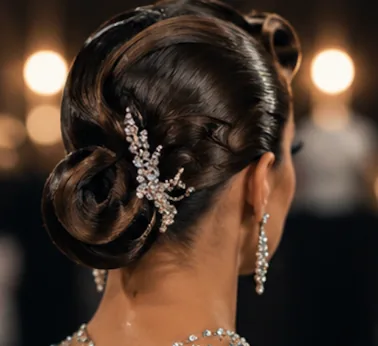
Ballroom hair is one of the most underestimated parts of the complete look. A competition hairstyle is not an everyday hairstyle made tighter and sprayed harder. It changes the shape of the head, and therefore the dancer's entire silhouette.
From across a large ballroom, the audience is not analyzing individual curls or hairpins. They see shape, and that shape has to work with the dancer's face, neck, shoulders and costume:
- An open-back dress may benefit from a hairstyle that leaves the neck and back beautifully exposed.
- A highly detailed neckline may need something cleaner so the dress and hair do not compete.
- Dramatic earrings need enough space around the face to actually be seen.
The hairstyle also has to survive movement. Ballroom dancers rotate quickly, change direction and create speed. Hair must stay secure while still looking polished and intentional. And just like the dress, it has to suit the individual. The goal is not perfect ballroom hair. It is the right ballroom hair for that dancer, that dress and that performance.
5. Tan is more than just looking darker
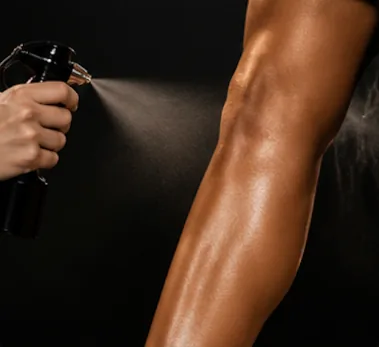
Competition tanning can look excessive to someone seeing ballroom for the first time. But ballroom lighting changes the way the body appears. Strong overhead lights can wash out natural skin tone, flatten muscle definition and reduce the contrast of body lines, especially from a distance. A properly prepared competition tan creates a more even surface and makes the body's shaping easier to read. Shoulders, arms, back, legs and muscle lines become more defined. This is especially noticeable in Latin and Rhythm, where more of the body is exposed.
The goal is not simply to become darker. A good ballroom tan should look smooth, even and intentional under competition lights. Preparation matters. Application matters. Hands, feet, face and body should all belong to the same image. When it is done well, you do not notice the tan first. You notice the dancer's lines.
6. Ballroom makeup is designed for the floor, not the mirror
Competition makeup can look surprisingly strong from two feet away. Walk twenty or thirty feet back and suddenly it makes perfect sense.
A ballroom is a completely different visual environment: strong lights, constant movement, distance, dramatic costumes and many other couples competing for attention. Subtle everyday makeup can disappear almost completely. The eyes need enough definition to communicate expression from a distance. Lashes frame the eyes. Brows structure the face. Contouring restores dimension that strong lighting removes. Lip color keeps facial expression visible.
But more is not automatically better. Makeup should complement the costume, skin tone, hairstyle and the character of the performance. A soft, elegant Smooth presentation may call for something different from a powerful Latin look. It is makeup designed for movement, lighting and distance. For a step-by-step guide, see Dance Competition Makeup: A Practical Guide.
7. Jewelry and stones have a job
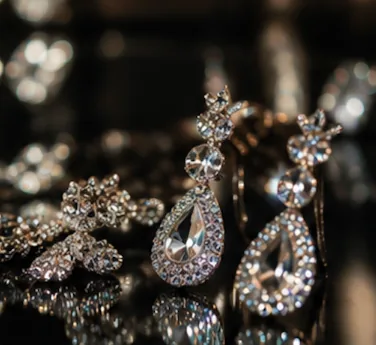
Rhinestones are practically part of ballroom culture, but they are not there only because dancers like sparkle. Light is part of the performance. As a dancer rotates, changes direction or travels across the floor, stones catch the lighting and create small flashes of movement. Well-placed stones can emphasize areas of the body, draw attention to the face, or extend the line of a costume.
Jewelry works the same way. Large earrings frame the face and stay visible from a distance. Bracelets accentuate arm movement. Hair jewelry visually connects the hairstyle with the detailing of the dress.
This is also where restraint matters. If the dress is already highly detailed, adding every possible accessory starts competing with the dancer. You do not want the audience thinking "beautiful earrings, beautiful necklace, beautiful dress, beautiful shoes." You want them thinking "she looks incredible." That is the difference between collecting beautiful pieces and creating a complete image.
8. Even the shoes matter

Ballroom shoes are performance equipment first. Balance, flexibility, heel height, fit and connection to the floor matter enormously. But visually, shoes are also part of the costume, especially in Latin and Rhythm, where legs and feet are exposed. A shoe can either extend the line of the leg or interrupt it.
That is one reason flesh-toned competition shoes are so common: when the tone works with the dancer's tan, the line continues from the leg through the foot instead of stopping abruptly at the ankle. A small detail? Absolutely. But ballroom styling is built from dozens of small details.
9. Nails, accessories and the details people don't think about
Hands are extremely expressive in ballroom dancing, so nails become part of the image too, particularly in photographs and close-up video. The same applies to jewelry placement, shoe straps, costume finishing, tan around the hands and feet, and the way each accessory interacts with the rest of the styling.
None of these details should become the star of the performance. They should simply support it. That is one of the interesting contradictions of great ballroom styling: a tremendous amount of work goes into creating something that should ultimately look effortless. When you pack for an event, use our Ballroom Competition Packing List so none of these details stay at home.
The best look isn't necessarily the most expensive one
This is especially important for newer dancers. It is easy to look at experienced competitors and assume that a beautiful ballroom image means buying the most expensive dress, jewelry and accessories available. It does not.
Understanding proportion, fit, color and consistency makes an enormous difference regardless of budget. A simpler dress that fits beautifully and complements the dancer can create a much stronger impression than an expensive costume that does not suit her.
Good styling is mostly about making good decisions, and dancers get better at those decisions through experience. Over time you learn which necklines flatter you, which skirt shapes create your best proportions, which colors photograph well, which hairstyles complement your face and neck, and which makeup lets your expression stay visible without overwhelming your features. That knowledge becomes part of becoming an experienced ballroom dancer.
Your ballroom style is something you build
Very few dancers discover their perfect competition image immediately, and they should not expect to. Your first dress teaches you something. Your first competition hairstyle teaches you something. You see photographs and realize one detail looked fantastic while another did not translate the way you expected. You change your makeup. You try a different color. You discover that a silhouette you never considered works beautifully on your body.
Your confidence changes. Your dancing changes. And because your dancing changes, your styling changes with it. That is why personal ballroom style is molded over time rather than purchased all at once.
Eventually, something interesting happens: you stop trying to look like a ballroom dancer. You start looking like yourself as a ballroom dancer. The dress feels like you. The hair feels like you. The makeup no longer feels like a costume. When you step onto the floor, people are not noticing nine separate decisions. They see one person, one style, one complete performance. That is the real goal.
Be you. On purpose.
Ballroom teaches much more than steps. It teaches presentation, discipline, body awareness, confidence and the ability to communicate without saying a word; see Ballroom Dancing: The Art of Manners We're Slowly Losing.
Developing your visual style is part of that process. It takes experimentation, mistakes, experience and, most importantly, time. Your style does not need to look like anyone else's. It needs to make sense for you.
Preparing for your first competition? Start with What Is DanceSport? and learn about our DanceSport coaching with World Cup Champion Jelena Stojkovic in the Dallas area.
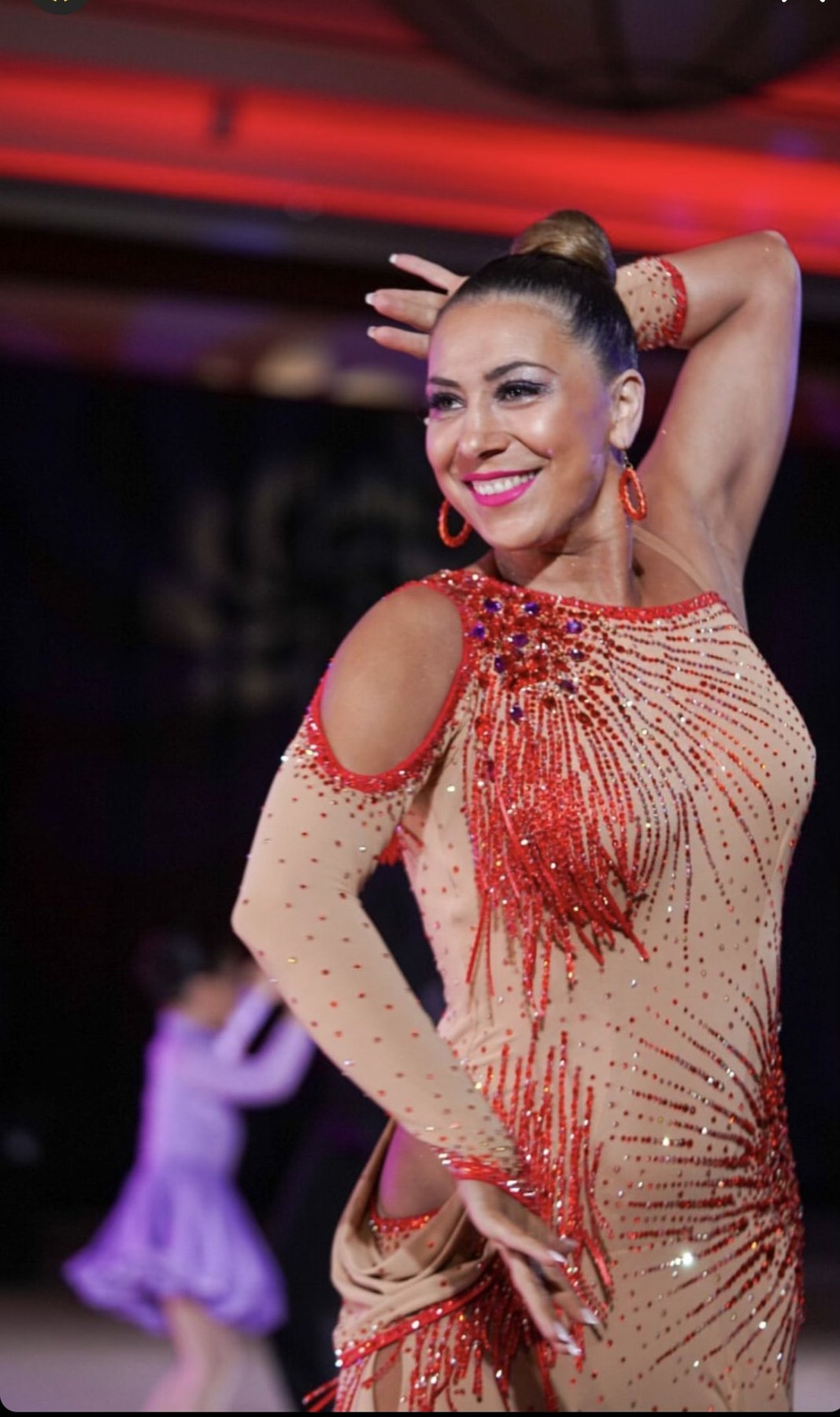
Jelena Stojkovic
Founder of AscenDance Studio. World Cup Champion, 14-time National Champion, International Winner, and Top Female Teacher in the USA nine years in a row, with more than 30 years in dance.
About Jelena →Book your first lesson
Private lessons in Addison, beginner Latin group classes in Dallas, and wedding first dance preparation.
14833 Inwood Rd
Addison, TX 75001
By appointment only
18484 Preston Rd #201
Dallas, TX 75252