
What to Wear to Ballroom Practice (and Why Your Coach Keeps Bringing It Up)
What to wear to ballroom dance practice: why shoes matter most, how to dress for Standard vs Latin, wedding rehearsals, and what actually ends a lesson early.
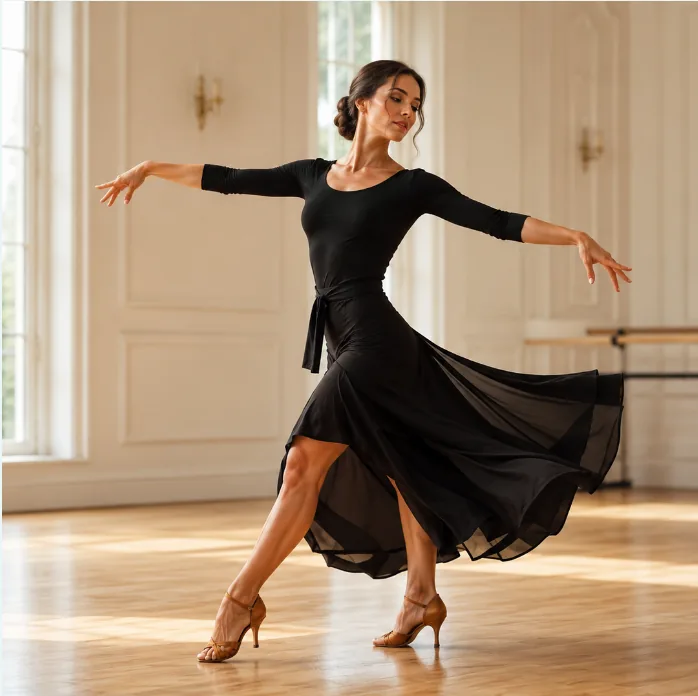
Ask any ballroom teacher what they would change about a beginner's first few months, and somewhere in the answer you will hear "the shoes" or "stop wearing baggy hoodies to lessons." Not because anyone cares how you look, but because they cannot see what your knees, hips and feet are doing under three layers of loose clothing.
Knowing what to wear to ballroom dance practice is not a styling decision. It is a visibility decision. Your hips, your weight transfer, the bend in your standing leg, the line from your hip to your heel: your coach is reading all of that in real time, and they can only correct what they can see.
The short answer: what to wear to your first lesson
- Top: fitted enough that your arms and torso are visible
- Bottoms: pants, leggings or a skirt you can bend and rotate in without tugging them back into place
- Shoes: a low heel or flat with a smooth sole (leather or suede), not sneakers
- Skip: long necklaces, hoop earrings, very wide-leg pants and anything you need to keep adjusting
Week one: just don't fight your own clothes
New dancers overthink this. You do not need dancewear for your first lesson. You need clothes that do not actively work against you.
Shoes are where people trip up. Running shoes feel safe because they are what you normally move in, but rubber soles grip the floor exactly when ballroom needs you to pivot. You feel the shoe stick while your body keeps turning, which is how ankles and knees get stressed. A leather-soled flat or an old pair of dress shoes will usually serve you better than brand-new trainers.
Why shoes outrank the outfit
If you only fix one thing before lesson two, fix your footwear.
Ballroom asks your feet to do things normal life rarely demands: roll through the floor on a rise, turn without catching the toe, transfer weight slowly enough to actually feel it happening. Sneakers and flip-flops cannot give you that information. They either grip too hard or fall off entirely.
A proper ballroom or Latin shoe has a suede sole built for exactly this: enough friction to push off, enough glide to turn, and a heel placement that shifts your balance forward in a way sneakers never will. You do not need expensive shoes in month one. You need a sole that lets you feel the floor instead of fighting it.
Your coach is reading a very specific checklist
When a teacher watches you dance, they are not taking in a general impression. They are scanning for which leg is actually carrying weight, whether the knee bends a beat early or late, whether the hip is moving from controlled rotation or just collapsing, and whether the foot is genuinely closing or just landing somewhere near the other one.
A baggy hoodie or wide-leg sweatpants does not make any of that impossible to see, but it makes it slower and fuzzier. Corrections that should take one pass end up taking three. In a private lesson you are paying for your teacher's eyes, so give them something to actually look at.
Dressing for Standard vs dressing for Latin
This is where practicewear stops being about comfort and starts being about training the specific skill you are working on.
Standard and Smooth
Waltz, Foxtrot, Tango and Viennese Waltz are about continuous shape: posture, frame, and the line your body draws across the floor. A skirt or dress with some swing gives you feedback leggings cannot. You see when your rotation is late, because the fabric lags behind you instead of moving with you. Stiff or skin-tight clothing hides that lag and lets the habit go unnoticed for weeks.
Latin and Rhythm
Cha Cha, Rumba, Swing and Salsa live in the hips, knees and ankles. Here, baggy pants work against you, not for modesty reasons, but because your coach needs a clean sightline to your knee release, hip action and weight transfer. Past the absolute-beginner stage, more fitted bottoms are how your teacher tells real hip action, driven by weight transfer, apart from hip action faked from the waist.
Wear Latin practicewear to a Standard lesson, or Standard practicewear to a Latin lesson, and you have not made a fashion mistake. You have simply given your body the wrong feedback for the skill you are training that day.
Wedding dances run on a different clock
Early wedding dance lessons can happen in whatever is comfortable. That changes as the date gets closer.
If the bride is wearing a specific heel height or a specific pair of shoes on the wedding day, the last few rehearsals should happen in shoes as close to the real pair as possible, ideally the actual shoes. This teaches the balance, stride length and turning speed, and gives the shoes time to break in before the wedding.
A floor-length dress shortens how big a step can be, a small venue floor limits how much space the choreography can use, and a fitted suit rules out movements that felt fine in sweatpants. None of this should be discovered for the first time the morning of the wedding. It can all be tested weeks ahead by rehearsing in conditions close to the real thing. See When to Start Wedding Dance Lessons for how to plan those final rehearsals.
What actually ends a lesson early
In years of teaching, the practicewear problems that derail a lesson are almost always the same handful:
- a shoe that slips at the heel mid-turn
- pants long enough to catch under a heel during a back step
- a necklace or earring that gets caught during a hold
- a skirt hem that wraps around the ankle on a spin
- a sleeve that blocks an arm position right when you need it open
None of these are about looking polished. They are about not stopping the lesson to retie, readjust or untangle, which over a 45-minute lesson eats more training time than people expect.
The honest version of "dressing the part"
There is a real, physical effect to wearing something that fits the dance: people stand taller in it. Not because the outfit is flattering, but because clothing that moves correctly removes one more thing to think about. You stop tugging your shirt down and start feeling your frame.
Dressing the part does not mean dressing like you are more advanced than you are. A beginner dressing for safety and a competitor dressing for a showcase are doing the same thing at different intensities: making sure the clothes serve the training instead of getting in its way. Competition presentation is its own topic; see Dance Competition Makeup and What Is DanceSport?
A quick gut-check
Before your next practice, ask one question: can my coach see my knees, hips and feet right now?
If the honest answer is no, that is the fix. Not a new wardrobe, just clothes that get out of the way. The right shoes, the skirt that helps you feel rotation, dressing differently for Latin night versus Standard night: all of that can come later, once you know what you are actually training for.
Right now, the outfit's only job is to stop being the thing your coach has to talk about instead of your dancing. Ready for your first lesson? Start with a private session in Addison or our beginner Latin group classes in Dallas.
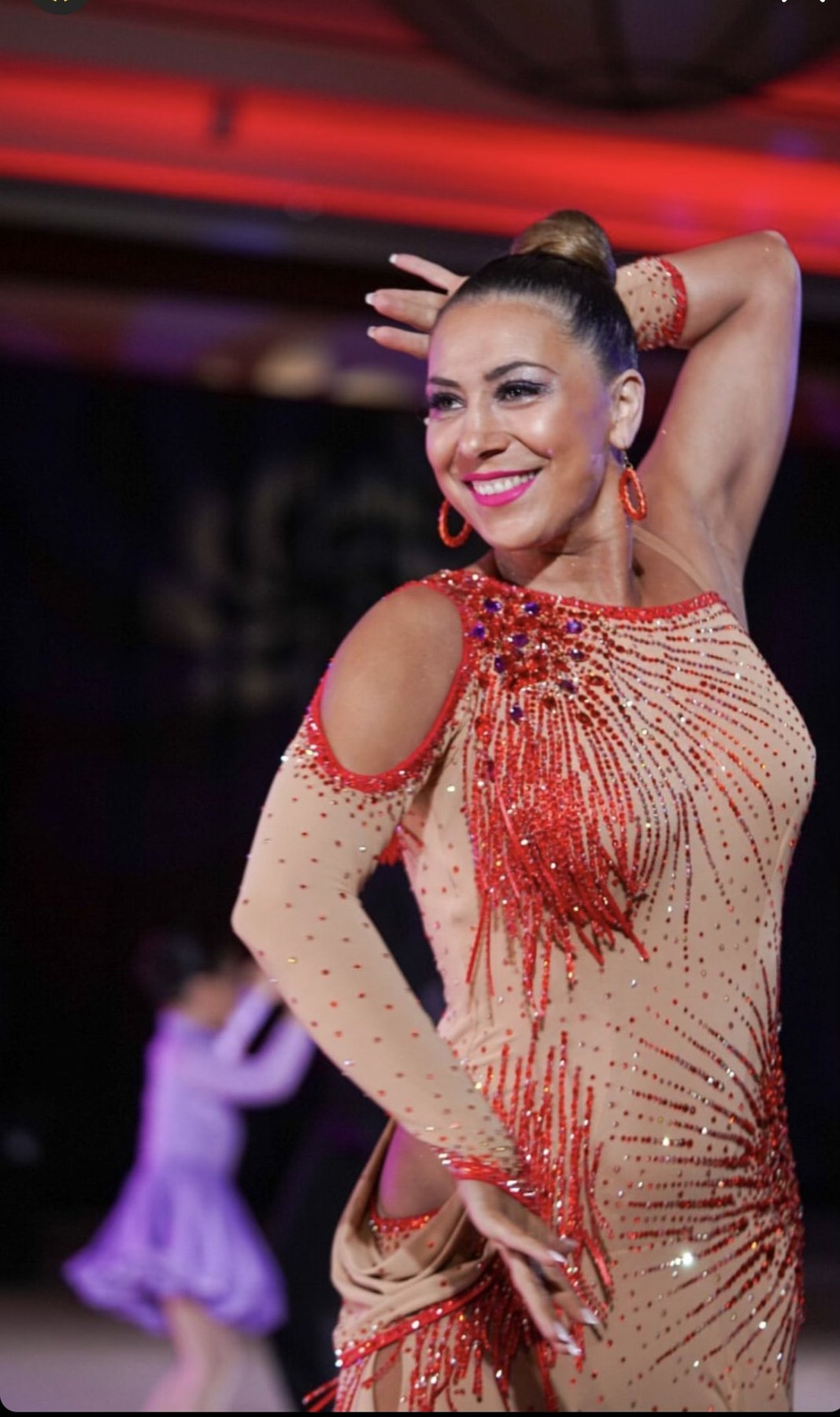
Jelena Stojkovic
Founder of AscenDance Studio. World Cup Champion, 14-time National Champion, International Winner, and Top Female Teacher in the USA nine years in a row, with more than 30 years in dance.
About Jelena →Book your first lesson
Private lessons in Addison, beginner Latin group classes in Dallas, and wedding first dance preparation.
14833 Inwood Rd
Addison, TX 75001
By appointment only
18484 Preston Rd #201
Dallas, TX 75252