
The Hidden Lessons Children Learn Through Ballroom Dance
Kids' ballroom classes teach more than steps: focus, coordination, handling correction, partner awareness, discipline and confidence they actually earn.

Most parents sign a child up for ballroom dance expecting one of two things: they will learn some steps, or they will burn off energy before dinner. Both happen. Neither is the real reason a good ballroom class for kids is worth the drive each week.
Watch a children's class for ten minutes and you will see a child doing five things at once: listening for the beat, counting it in their head, remembering which foot goes where, holding their posture, and adjusting because the teacher just told them to slow down.
That is not just exercise with music. That is a child's brain and body being trained to work together in real time, with immediate feedback the moment something is off.
The body and the brain are trained together
Many children's activities separate the physical from the mental: sports for the body, schoolwork for the mind. Dance does not split that way.
A child learning a basic box step has to hear the music, hold the count, sequence the footwork and keep their balance, all at once, all live. That sequencing is the part many parents miss. "Step here, then turn, then wait, then come back to posture" uses the same mental skill children need when following multi-step instructions at school, just disguised as movement and music.
Focus gets built by the movement, not by nagging
Telling a distracted child to focus rarely works, because focus has nothing concrete to grab onto. Dance gives focus a job.
Get the timing wrong and the step feels wrong. Let the posture drop and the turn gets harder. Rush the count and the rhythm falls apart. The lesson lands because the feedback is physical, not only verbal.
A child does not need a long explanation that they rushed. They can feel it. Over time that builds a different kind of attention: not "pay attention because I said so," but "pay attention because it makes the movement easier."
Energy is not the same thing as coordination
Plenty of children labeled "high energy" are not actually uncoordinated. They simply have not learned where to put the energy yet.
Ballroom gives that energy somewhere specific to go: transferring weight cleanly between feet, changing direction without losing balance, turning without overshooting, and keeping the arms in frame instead of letting them fly everywhere.
A child who starts the year stomping to the beat may, by spring, be making small controlled adjustments to posture, timing and direction without being told. That is not more energy. It is the same energy, finally organized.
Getting corrected stops feeling personal
The first few times a teacher says "try that again," many children hear "you got it wrong" and freeze a little.
A good studio works through that quickly because corrections happen constantly and visibly. Every child in the room receives them, and the class keeps moving.
What actually changes a child's relationship with correction is watching the same fix work twice in a row. The step that felt impossible on Tuesday becomes manageable the following week. That is a concrete, repeatable experience of "I could not do this, then I practiced, and now I can." It is much harder to teach with words than with a turn that finally clicks.
Partner work builds social skills children cannot fake
This is the piece many activities skip. The moment a child has a partner, even in a beginner hold, their own movement stops being the only thing that matters.
Pull too hard and the partner stumbles. Rush ahead and the timing falls apart. Ignore their space and you step on their feet, literally and immediately, with no adult needing to explain why that did not work.
Children learn to share space and wait for timing because the consequence is physical, not because someone lectured them about manners. It is a lesson the body remembers, not just a rule the child was told to follow. We write more about this in Ballroom Dancing: The Art of Manners We're Slowly Losing.
The confidence that sticks is the kind that is earned
Praise alone does not build much. A child who hears "great job" for something they cannot actually do yet learns to discount praise quickly.
What sticks is different. It is the moment a child remembers a sequence they could not remember three weeks ago. It is the moment they trip mid-routine and keep going without the class stopping for them. It is the moment they realize the correction worked because the step finally feels better.
That is confidence with evidence behind it: I could not do this. Now I can. Ballroom gives children that experience again and again because progress in dance is visible and physical, not abstract. See also How Ballroom Dancing Builds Confidence.
Discipline that does not feel like pressure
Dance discipline is not about demanding perfect technique from a seven-year-old. It is smaller than that:
- Show up.
- Listen when the teacher is talking.
- Run the same eight counts five times even when it feels boring.
- Take the correction instead of arguing with it.
None of that requires a child to feel like a failure for being imperfect. It simply asks for consistency, and consistency repeated week after week is most of what discipline means at that age.
Presence gets practiced into the body
Posture, eye contact, staying calm after a mistake in front of the room: these are not things you can simply talk a child into. But they are exactly what dance asks for, step by step, every class.
A child who spends a year being corrected on standing tall, holding their frame, listening to the music and finishing the movement carries some of that into other situations: a school presentation, a performance, a competition, or even the way they walk into a room. Dance teaches presence quietly. The child may not know how to name it yet, but the body is learning it.
What to look for in a ballroom class for kids
- A qualified teacher with real ballroom and Latin training, not just general movement classes
- Partner work from the start, adapted to the child's age
- Clear structure: warm-up, technique, partner practice, a short routine
- Frequent, calm corrections for every child, not only the most advanced
- A path forward for children who want to perform or compete
The steps were never really the point
Children absolutely walk out of ballroom class knowing how to dance. But the steps are the visible layer over something deeper: sustained attention, controlled movement, correction, patience, partner awareness, and the specific kind of confidence that only appears after real practice.
A child does not have to become a professional dancer for ballroom training to matter. The growth happens either way. For a broader look, read How Dance Supports a Child's Development.
Our Youth Ballroom Program in the Dallas area is $175 per month, taught by World Cup Champion Jelena Stojkovic.
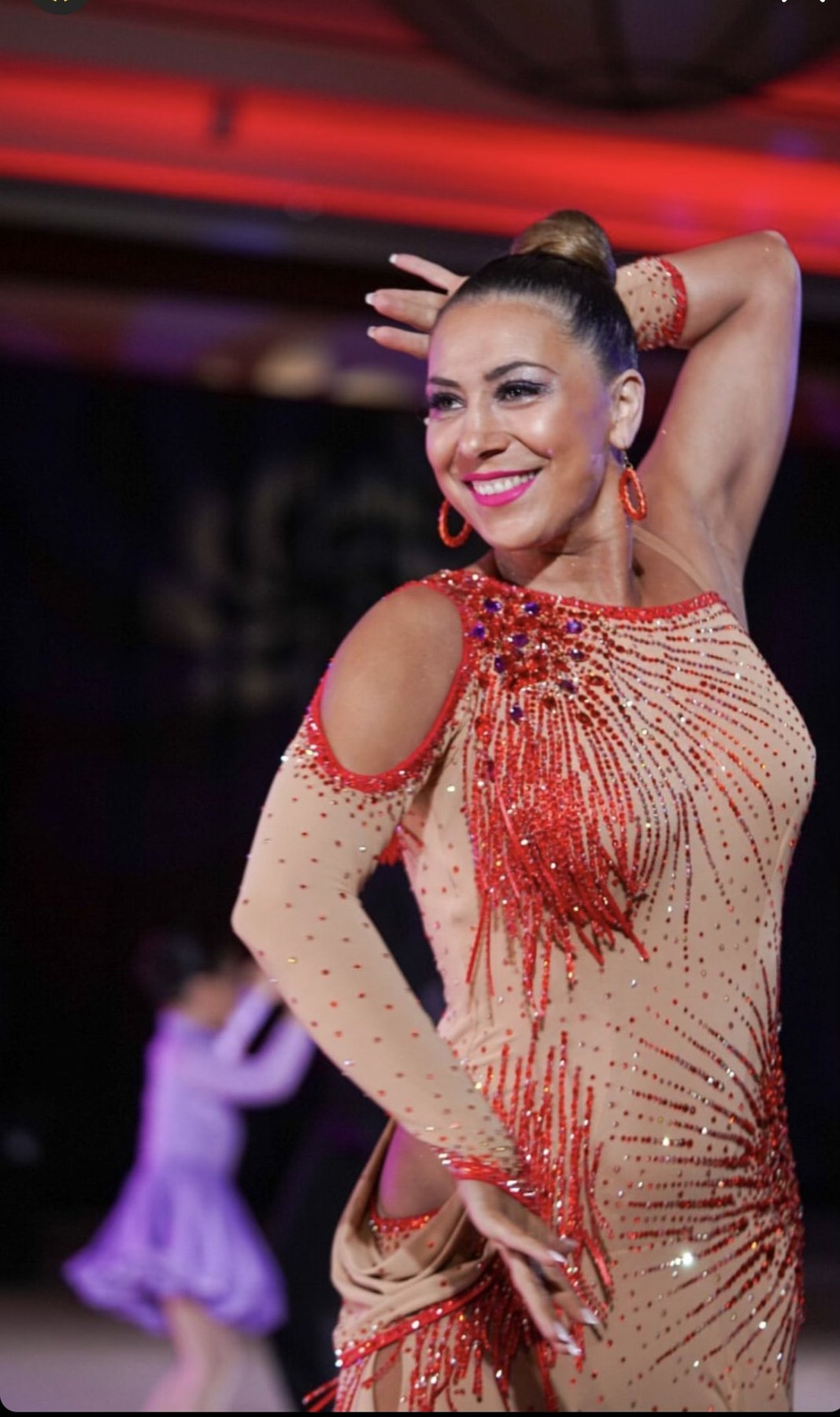
Jelena Stojkovic
Founder of AscenDance Studio. World Cup Champion, 14-time National Champion, International Winner, and Top Female Teacher in the USA nine years in a row, with more than 30 years in dance.
About Jelena →Book your first lesson
Private lessons in Addison, beginner Latin group classes in Dallas, and wedding first dance preparation.
14833 Inwood Rd
Addison, TX 75001
By appointment only
18484 Preston Rd #201
Dallas, TX 75252